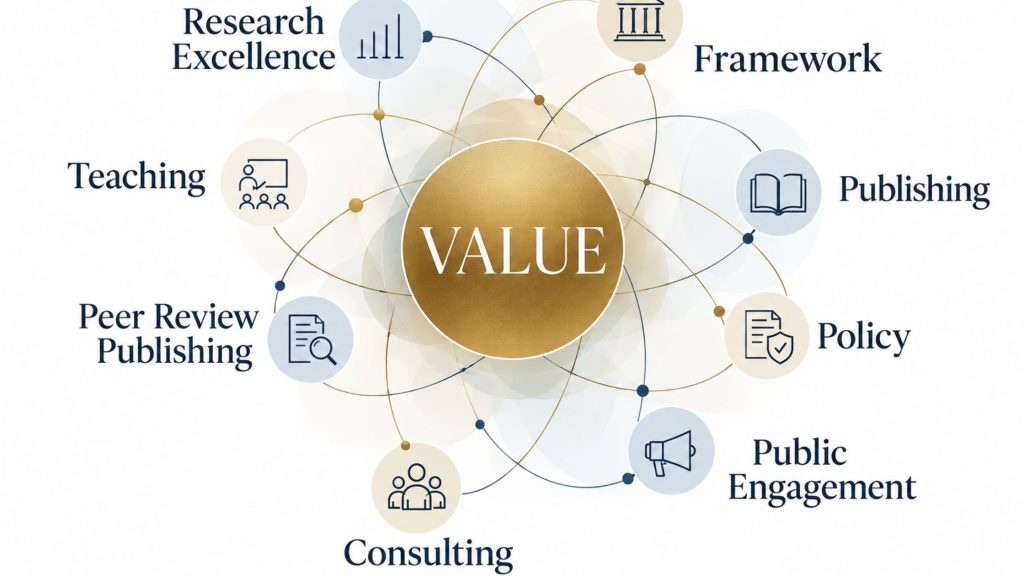
Who Creates, Captures and Pays for Value in SHAPE Research?
Commercialisation and SHAPE disciplines is about VALUE. What does it mean for businesses that want to contribute their own insights and research and not only ” be helped” by research?

Commercialisation and SHAPE disciplines is about VALUE. What does it mean for businesses that want to contribute their own insights and research and not only ” be helped” by research?

While Scotland actively develops international travel-trade links, attracting high-value visitors requires more than a great itinerary; it demands local networks.

While UK exports soar, internationalisation often conceals hidden costs. We have developed a proactive framework to identify and eliminate these expenses before you scale.

Scotland’s SMEs have demonstrated remarkable resilience, but the latest evidence suggests this is becoming a fragile equilibrium of defensive survival. With rising costs, targeted recruitment bottlenecks, and frozen capital investment, businesses are protecting today’s operations at the expense of tomorrow’s growth. The next economic test is not simply whether SMEs can endure uncertainty, but whether the ecosystem and executive leadership can convert resilience into structural transformation.

For the past several years, the dominant economic question was whether SMEs could survive successive macroeconomic shocks. Today, mere survival is no longer a viable long-term strategy. Across the UK and Europe, a profound structural divergence is widening the gap between proactive, digitally mature firms and those locked into a defensive cycle of liquidity stress. The next phase of market leadership will be defined by a much harder question: which SMEs possess the capital, capability, and confidence to modernise before the next shock arrives?