Commercialisation is becoming a bigger part of conversations in UK higher education. For STEM subjects, the pathways are familiar: intellectual property, patents, licensing, spin-outs, investment and technology transfer.
For SHAPE, as we have already pointed out, the route is a little bit different and much less obvious. We have been exploring SHAPE as a potential investment avenue for companies like ours, which not only support but also invest in promising research. What our research is bringing to light is the concept of value that differs significantly when it comes to SHAPE research.
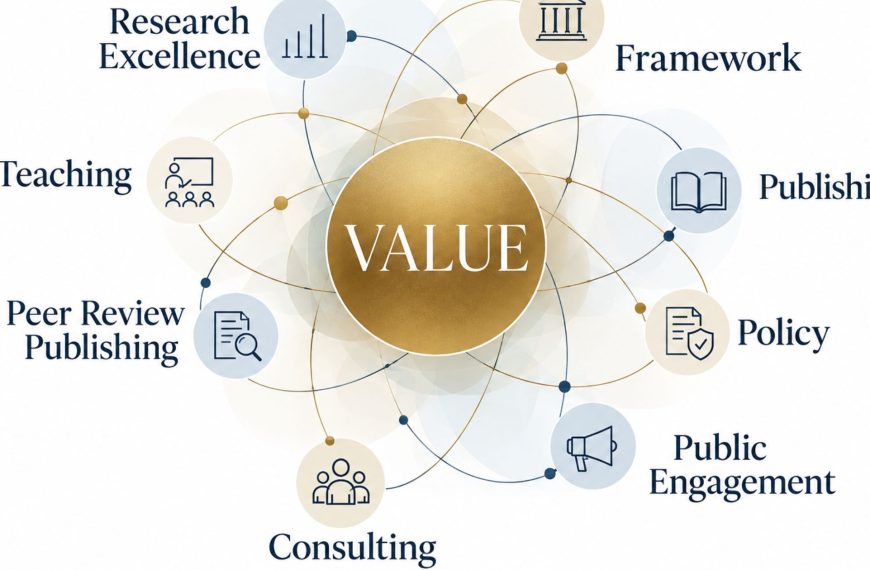
In fact, SHAPE research can influence policy, transform organisational practices, enhance services, deepen cultural understanding, support communities, create new intellectual property, open up consultancy opportunities, and lead to the development of new products and services. Very rarely, however, we can talk about spin-outs or commercialisation examples in the traditional “STEM” sense.
Therefore, our question can no longer be: “can SHAPE be commercialised and can investors contribute?” This would confuse SMEs and investors seeking to contribute to research and invest in it. Rather, the question is:
What does value mean in SHAPE commercialisation — who creates it, who captures it, and who pays for creating it?
This post shares some early thinking rather than a finished argument. We are preparing a fuller report, and I would welcome reactions from anyone working on these questions.
Where the question of value comes from
Over recent months, the NorthStar Consulting team has been speaking with academics and researchers in Scotland, England, France, Canada and the Nordic countries.
The conversations had a practical purpose. At NorthStar Consulting, we regularly look at promising projects and opportunities for investment, expertise or strategic support. Understanding how researchers, universities and external organisations see SHAPE commercialisation helps us decide where we might contribute, collaborate or invest.
One theme, however, came up again and again: commercialisation in SHAPE cannot be reduced to turning research into a product. Many academics are driven by wanting their work to make a difference; this goes from influencing policy, improving practice or building something that would not otherwise exist. Any model of commercialisation has to take that motivation seriously.
The more we talked to various people, the more one thing also became clear: different people mean different things by “value”:
- A business may think in terms of revenue, productivity or competitive advantage.
- A university may think of research income, impact, reputation, student experience and partnerships.
- An academic may value recognition, intellectual freedom, career progression, new research opportunities or seeing their work used beyond academia.
- A community may value better services, cultural preservation or social change.
These forms of value are not mutually exclusive. But they are rarely discussed as part of the same conversation.
The question that changed the conversation
In one interview, I described the idea of an external organisation contributing expertise, resources and potentially investment to support SHAPE research. The first response was:
“What’s in it for the academic?”
It is a fair question, and one some of us recognise. Many of us at NorthStar come from academic backgrounds and know how much researchers are already juggling.
But it also made us realise the question applies in every direction. An external partner offering expertise, networks or funding is also looking for something legitimate in return: knowledge, a solution to a problem, reputation, learning, social impact or, sometimes, a financial return. The university and the wider community have their own interests too.
It also reflects how this kind of collaboration usually works. Academic research is rarely ready to apply as it stands. Much of what we do is connect the dots: we come across brilliant research and think about how it could inform a business case or help solve a real problem. That translation step is where a lot of the value is created — and where it is easiest to lose.
This is not about reducing research to a transaction. It is about recognising that value is already being exchanged, whether or not we call it commercialisation — and asking whether everyone involved can see what they are giving and what they are getting.
Creating value is not the same as capturing it
The distinction between value creation and value capture is well established in management and strategy literature. I think it is a useful lens for SHAPE research.
A project can create a lot of value without the people who created it necessarily benefiting from it:
- A researcher may produce knowledge that improves a company’s strategy.
- A community project may generate significant social value.
- A university may create intellectual property.
- An external partner may bring the commercial expertise that makes an idea viable.
- Public funding may have paid for the infrastructure that made the work possible.
These actors do not necessarily benefit in the same way.
Research assessment adds another layer. Since impact became part of the Research Excellence Framework in REF 2014, researchers have increasingly been asked not only to produce knowledge, but to show what it enables others to do. Impact remains a major element of REF 2029. In effect, impact has become an institutional way of recognising value.
Yet an impact case may show substantial value for an external organisation, while the researcher’s return is mainly recognition, visibility or future opportunities — none of it necessarily financial. In SHAPE, where the path from research to benefit is often longer and less tangible than in conventional technology transfer, this gap is especially visible.
A working framework
Commercialisation is often pictured as a straight line: research → product → market → revenue. The interviews suggest that, for SHAPE, it looks more like a network of people and organisations exchanging different kinds of value.
To make sense of this, we are developing a working framework. It has five elements, each a question to ask of any project:
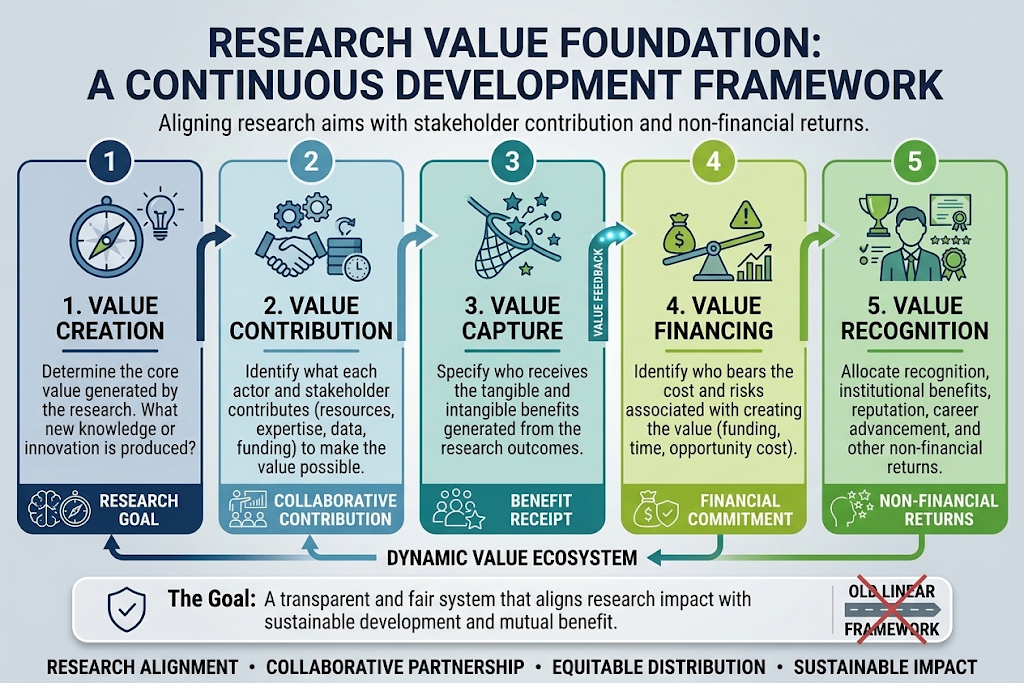
The fifth element may matter most in academia. An academic may take on a project (or develop a research proposal) because it offers recognition, access to data, policy influence or new research.
A partner may join for insight, reputation or access to expertise. A university may support it for impact, income or strategic partnerships.
A community may take part because the research tackles a problem that matters to it. One project can hold several value propositions at once.
This also suggests that commercialisation and valorisation are not quite the same thing.
Commercialisation asks: can this research become commercially viable?
Valorisation asks: what value can this knowledge create, and how can that value be realised?
For much SHAPE research, the second question may be the better starting point. The outcome might be revenue, but it might equally be a new service, a consultancy model, a policy change, a cultural product, a social enterprise or better public services.
The framework is a working tool rather than a finished model. I expect it to change as the research continues.
Where investors might fit
Most discussion of university–business engagement assumes the business brings a problem, and the university supplies knowledge, students, consultancy or research.
There is another possible model that we are investigating along with other stakeholders. An external organisation might spot research it believes is valuable before there is a defined product, and invest in helping it develop. That investment could be money, but it could equally be expertise, networks, market knowledge, access to customers or organisational capability.
This could matter for SHAPE. A historian, designer, linguist or policy researcher may have no obvious route to venture capital, yet their work may address a problem organisations would pay to solve. The task may not be to make SHAPE look more like STEM, but to design models of value exchange that suit it.
What comes next
Perhaps the most useful question for SHAPE commercialisation is not “How do we persuade academics to commercialise?” but “What would make taking part worthwhile for everyone involved?”
Commercialisation does not have to mean abandoning the social purpose of research. If commercial value can help sustain research, and social and financial value can coexist, it may become one way for SHAPE research to become more sustainable rather than less relevant.
We are continuing the interviews and developing the framework for a fuller report. If you are a researcher, research office, funder or organisation working on SHAPE knowledge exchange — and especially if you see gaps in the framework — I would be glad to hear from you.