Search and SEO have changed more in the last two years than in the previous fifteen.
For SME, this directly affects traffic, advertising costs, lead generation, and long-term visibility.
Users are no longer searching the way they used to. Instead of typing a query into Google, scanning blue links, and clicking through to a website, many now ask AI systems for answers and wait for summaries. Increasingly, they receive a structured response without ever visiting a source.
This evolution — driven by platforms like OpenAI (ChatGPT), Microsoft (Copilot), and Google’s AI-generated search features — is reshaping the entire digital ecosystem. For SMEs and microcompanies, understanding what this means is no longer optional. It is strategic.
The Shift: SEO From Clicking to Summaries
Traditional SEO was built around one core assumption: users click links.
The system worked like this.
A user searched. A results page appeared. The user evaluated titles and meta descriptions. Then they clicked one of the top results.
Traffic flowed.
Rankings mattered.
Page one was everything.
Today, that linear journey is fragmenting.
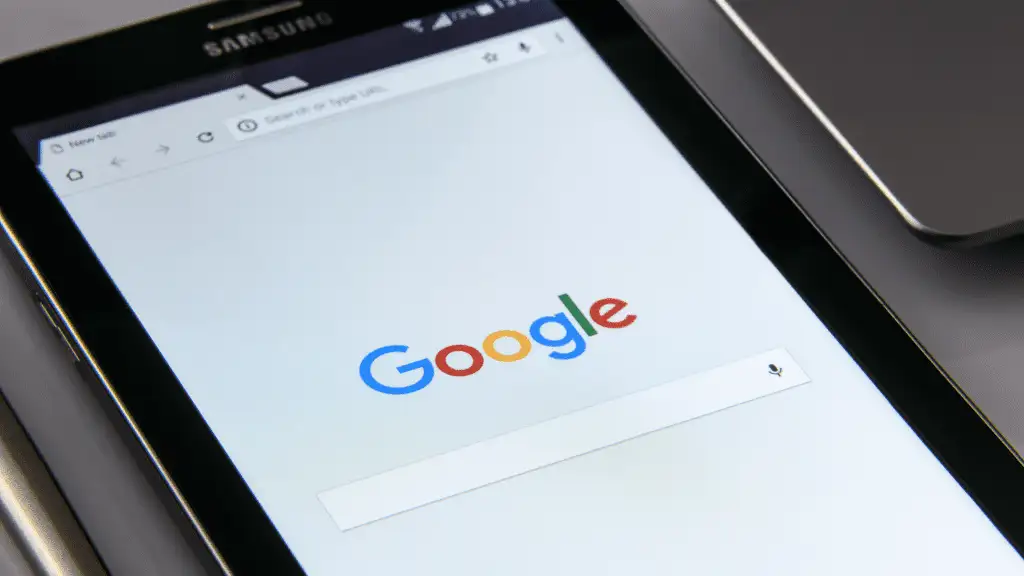
Search results pages increasingly contain AI-generated summaries at the top. These summaries combine information from multiple sources into a single answer. In many cases, the user’s need is satisfied immediately. No click, no website visit and no pageview.
This is known as zero-click search, but AI is accelerating it to a new level. It is not simply answering “What is SEO?” It summarises comparisons, product evaluations, strategy explanations, and even recommendations.
For SMEs, this creates a paradox: your content may be visible, even influential, yet receive fewer direct clicks.
The New Role of the SERP
The Search Engine Results Page (SERP) used to function as a gateway. However, in this new scenario, it behaves more like a destination.
It has happened to all of us: we enter the query, which is no longer just a question but full sentences, and we wait. But we are no longer waiting for the results. We are waiting for the AI aggregator to give us the answer with the references.
Ask yourself: how much time do you find yourself reading from an actual website vs how much time you agree or entrust AI and/or Reddit? Although we are not advocating for universalising one’s own experience, it may be more common than we think.
AI summaries, featured snippets, product panels, map packs, shopping integrations, and video previews compete for attention before traditional organic links even appear. Paid ads are often integrated seamlessly into these environments.
The result is a compressed attention economy.
Instead of competing for ten blue links, businesses are competing for inclusion within an AI-generated narrative. Visibility is no longer about ranking but about being selected as a trusted source within a synthesised answer.
This subtle shift changes the nature of SEO from “rank optimisation” to “authority optimisation.”
What does it mean for SMEs investing in Paid advertising? Can we expect a flection in the ROAS? Shall we strap in for the rollercoaster of soaring costs and mediocre performances?
Paid Advertising: What we are learning
Paid advertising is also reshaped by AI-driven search behaviour. When users receive detailed summaries upfront, informational clicks decrease. That reduces the effectiveness of broad, awareness-stage ad campaigns. Cost-per-click may rise on high-intent terms as competition concentrates around bottom-of-funnel keywords.
At the same time, AI compresses the decision journey. Users who do click are often further along in their evaluation process. They have already compared options or they have already read and synthesised the pros and cons or arrive more informed. IF they arrive, or they are content with what they found and move on. They may never arrive at the source of that aggregated answer.
For SMEs, this means traffic volume may decline while conversion quality improves. The challenge shifts from “How do we get more visitors?” to “How do we convert more effectively when they arrive?” Brand recognition also becomes more important. If AI mentions your brand in a summary, users may later search specifically for you. Paid campaigns targeting branded terms may become strategically critical.
In our report “The state of programmatic advertising” we indeed explain how automation has improved bidding efficiency and accelerated campaign execution. Yet, AI has also raised the operational threshold required to compete effectively.
Take Google’s Performance Max (PMax). Under the right conditions, it can deliver strong conversion performance. However, most of its spend — often around 90% — is allocated to feed-driven, bottom-funnel inventory. In practice, this means PMax is primarily a demand-capture tool rather than a demand-creation engine.
Stable optimisation generally requires 30–60 conversions per month, alongside consistent daily budgets that can quickly push SME spending into the £3,500–£5,000 monthly range. Without sufficient scale, campaigns remain in learning phases, performance fluctuates, and reported ROAS may mask internal cannibalisation.
In short, the system rewards volume.
On LinkedIn, the challenge is different. Targeting precision is unmatched in B2B, but costs remain structurally high. As AI compresses decision cycles, advertisers concentrate spending around high-intent audiences, intensifying competition and driving up lead costs. Lead quality may improve — but margin pressure increases.
At the same time, media costs are no longer the only concern. In our analysis of programmatic advertising in 2026 vis-à-vis 2025, we highlight rising compliance and governance overhead, with SMEs experiencing estimated operational cost increases of 8–12% due to regulatory requirements. Savings from automated bidding are increasingly absorbed by data protection, measurement infrastructure, and platform dependency.
This also explains the growing divide in the agency market. Low-cost automation stacks and outsourced fulfilment can reduce visible fees, while platforms like HubSpot appear expensive by comparison. But the real question for SMEs is not price alone — it is sustainability, measurement clarity, and compliance resilience.
Several trends are clear. High-intent search will remain expensive. Performance Max will stay algorithmic and scale-dependent. LinkedIn will remain premium-priced. Compliance obligations will continue to increase. And AI will lower execution costs while raising strategic complexity.
Therefore, we can say that paid advertising is becoming more conditional. For SMEs, success will depend less on chasing automation and more on understanding incrementality, protecting margins, and building systems that remain measurable and defensible over time.
Content: from Volume to structure and clarity
As paid advertising changes, so does content. Content strategy revolved around publishing frequency, keyword density, and blog volume. The objective was clear: produce enough optimised content to rank consistently.
That approach is losing effectiveness.
AI systems do not reward volume. They reward clarity, structure, and authority. They prioritise content that explains concepts clearly, defines terms precisely, and demonstrates subject expertise. In other words, content must now be designed not just to rank, but to be summarised.
This requires a different mindset. Instead of writing to attract clicks, SMEs must write to become a reference point. Instead of creating surface-level articles targeting long-tail keywords, they must produce structured knowledge assets that demonstrate ownership of a topic. Easier said than done. We know that. We have the same issue as an SME that is competing in a rather messy and volatile market.
Well-defined frameworks, original insights, clearly articulated processes, and data-backed claims are far more valuable than generic blog posts.
Authority as the New Competitive Advantage
When AI systems generate answers, they synthesise from patterns of credibility and consistency. Brands that repeatedly publish high-quality, well-structured, expertise-driven content are more likely to be surfaced. For microcompanies and SMEs, this is both a challenge and an opportunity.
Large corporations benefit from brand recognition and distribution scale, but they often move slowly. Smaller companies, by contrast, can be sharper, more focused, and more precise in their positioning. When SMEs clearly define their niche and consistently publish authoritative, structured content within that niche, they significantly increase their likelihood of being included in AI-generated responses.
In the AI era, authority becomes less about volume-based backlink tactics and more about relevance, clarity, structured data, and demonstrable expertise. Backlinks still matter — but low-quality link-building strategies no longer create a durable advantage. They consume budget without strengthening credibility.
The strategic shift is simple: invest in expertise, infrastructure, and consistency. Avoid short-term SEO shortcuts. Work with practitioners who understand both search mechanics and AI-mediated discovery. Authority is no longer gamed; it is engineered.
The Metrics That Matter Now
If fewer users click, traffic alone becomes a misleading metric. So, what should we look for?
- Brand search growth
- Conversion rate improvements
- Direct traffic
- Assisted conversions
- Customer lifetime value
We have created a template for all our clients that you can find in our “Tools” section of the website. Bottom line, though: the goal shifts from maximising visitors to maximising influence and decision impact. If you are in a very niche market -like us, for example- do not despair! Things may take longer, so focus on your existing clients and maximise their contributions.
The Strategic Adjustment for SMEs
The companies that adapt successfully will rethink three core areas.
- First, they will redesign content around clarity and structure. Definitions, explanations, and clear subheadings make content more extractable for AI systems.
- Second, they will strengthen brand positioning. In a world of summaries, being memorable matters more than being everywhere.
- Third, they will align paid and organic strategies around high-intent queries rather than informational scale.
This is not the end of SEO. It is the evolution of it. SEO is no longer only about search engines. It is about answer engines.
The Bigger Picture
AI-driven summaries do not eliminate the need for websites. They change their purpose.
Websites become trust anchors. They become validation layers. They become conversion environments rather than traffic magnets.
For SMEs and microcompanies, this can be liberating. Competing for millions of pageviews was never realistic. Competing for authority within a focused niche is. The digital economy is moving toward fewer clicks and faster decisions. Businesses that understand this will build systems optimised not for noise, but for credibility.
The real question is no longer, “How do we rank first?” but “How do we become the source that AI chooses to reference?” That is the new SEO reality.