Internationalisation is one of the most overused and misunderstood terms in UK business support.
Too often, internationalisation is treated as:
- Exporting to another country
- Translating a website
- Attending a trade mission
- Finding an overseas distributor
In reality, internationalisation is none of those things on its own.
Internationalisation is the systematic preparation of a business to operate sustainably across borders — commercially, operationally, legally, and logistically.
This distinction matters because many UK SMEs, particularly in food, drink, creative industries, and ecommerce, are entering European markets without being internationalised at all. They are exporting — and absorbing hidden costs, risks, and complexity as a result.
This article explains:
- What internationalisation actually means
- Why logistics is central (not secondary)
- What UK businesses must now consider when selling to Europe
- Why “free trade” does not mean “free of charge”
- How small producers and e-commerce brands should prepare properly
What Internationalisation Really Means (And Why Exporting Is Only One Part)
Internationalisation is business transformation, not market access.
A genuinely internationalised SME has addressed:
- Commercial structure
Pricing, margins, and payment terms that survive VAT, duties, logistics, and returns - Operational readiness
Fulfilment, customer service, lead times, and scalability across borders - Legal and fiscal exposure
VAT treatment, excise duties, product compliance, and consumer law - Logistics and supply chain design
How goods physically move — and who pays, when, and where
Exporting is simply an outcome of internationalisation. Without preparation, exporting increases revenue and risk at the same time.
This is where many internationalisation strategies fail.
The Strategic Mistake: Confusing Market Entry with Internationalisation Strategy
A common SME “internationalisation strategy” looks like this:
- Identify a target country
- Research demand
- Adapt marketing
- Ship products
This is a market entry plan, not an internationalisation strategy.
An internationalisation strategy asks harder questions:
- Can our margins survive cross-border costs?
- Do we understand the total landed cost for the customer?
- Can our logistics model scale without breaking cash flow?
- Are we set up for returns, delays, or regulatory friction?
Without these answers, expansion is fragile.
Why Logistics Is Central to Internationalisation (Especially for E-commerce)
Logistics is often treated as an operational afterthought. In internationalisation, it is the structural backbone.
For e-commerce and product-based SMEs, logistics determines:
- Delivery speed
- Customer satisfaction
- Cash flow timing
- Regulatory exposure
- Margin erosion
International logistics is not just shipping.
It includes:
- Incoterms and delivery responsibility
- Customs clearance
- VAT at import
- Duties and excise
- Warehousing and fulfilment decisions
- Returns handling
A business that has not designed its logistics model has not internationalised, no matter how many markets it sells into.
Selling from the UK to Europe: Why “Free Trade” Is a Dangerous Myth
There is a persistent belief that trade within Europe is “free”.
It is not.
What exists is tariff-reduced trade, not cost-free trade.
For UK businesses selling into the EU, especially post-Brexit:
- Customs declarations are required
- VAT still applies
- Excise duties still apply
- Administrative costs still apply
- Cash flow is impacted
This distinction is critical for small producers and e-commerce brands operating on tight margins.
A Practical Example: Selling Spirits to Consumers in France
Scotland → France (Direct-to-Consumer)
A Scottish spirits producer selling directly to private individuals in France faces a layered cost and compliance structure that goes well beyond transport.
In practice, this typically includes:
- Export documentation and customs declarations
- Import VAT due in France, often paid upfront
- French excise duty on alcohol, payable in the country of consumption
- Customs clearance and administrative fees
- Delayed VAT and excise recovery, affecting cash flow
- Delivery responsibility decisions (Delivered Duty Paid vs Delivered At Place), which directly impact pricing, customer experience, and liability
Each of these elements introduces cost, administrative burden, and cash-flow pressure, all of which must be built into pricing and logistics decisions from the outset.
Italy → France
Selling spirits or wine from Italy to private individuals in France removes the external customs border, but it does not eliminate regulatory or tax obligations.
In this case, the producer still faces:
- Excise duties payable in the destination country
- VAT obligations under EU distance-selling rules
- Local compliance requirements and administration
- Ongoing reporting and fiscal responsibilities
However, compared to selling from the UK, the absence of a customs border means:
- No import declaration
- Reduced administrative friction
- Faster movement of goods
- Lower logistics and clearance costs
The product and the final price may be identical, but the cost structure, operational burden and the underlying economics are not.
VAT, Duties, and E-commerce: What UK SMEs Must Understand
For e-commerce businesses, internationalisation fails most often at VAT.
Key considerations include:
- Who is responsible for VAT at import?
- Are you charging VAT at checkout or on delivery?
- Are customers surprised by extra charges?
- Are returns financially viable?
Many UK ecommerce brands lose European customers not because of product quality, but because the total cost is unclear or unacceptable.
Internationalisation requires designing pricing and checkout experiences that reflect the true landed cost.
Internationalisation for Small Producers: Preparation Over Ambition
For food, drink, and creative SMEs, internationalisation should start with preparation, not promotion.
Questions to ask before expanding:
- Are margins built for cross-border friction?
- Is our logistics scalable or fragile?
- Should we ship direct or use an EU fulfilment hub?
- Do we understand the customer’s full cost experience?
- Are we prepared for regulatory and tax complexity?
Internationalisation rewards realism more than enthusiasm.
Why This Approach Differs from Traditional Business Support Advice
Much institutional guidance focuses on:
- Market opportunity
- Export readiness checklists
- High-level regulatory summaries
What is often missing is commercial consequence:
- How costs stack up
- How logistics reshapes the business model
- How cash flow behaves across borders
Internationalisation is not theoretical. It is operational, financial, and logistical.
Final Thought: Are You Exporting — Or Building an International Business?
The most important internationalisation question is not:
“Which market should we enter?”
It is:
“Is our business designed to operate internationally without breaking?”
That is the difference between exporting occasionally and internationalising sustainably.
For UK SMEs considering Europe, ecommerce, or cross-border growth, internationalisation is preparation first, sales second.
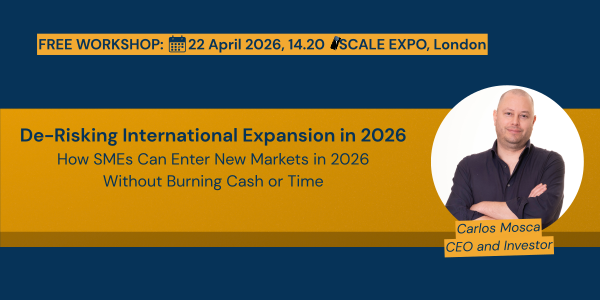
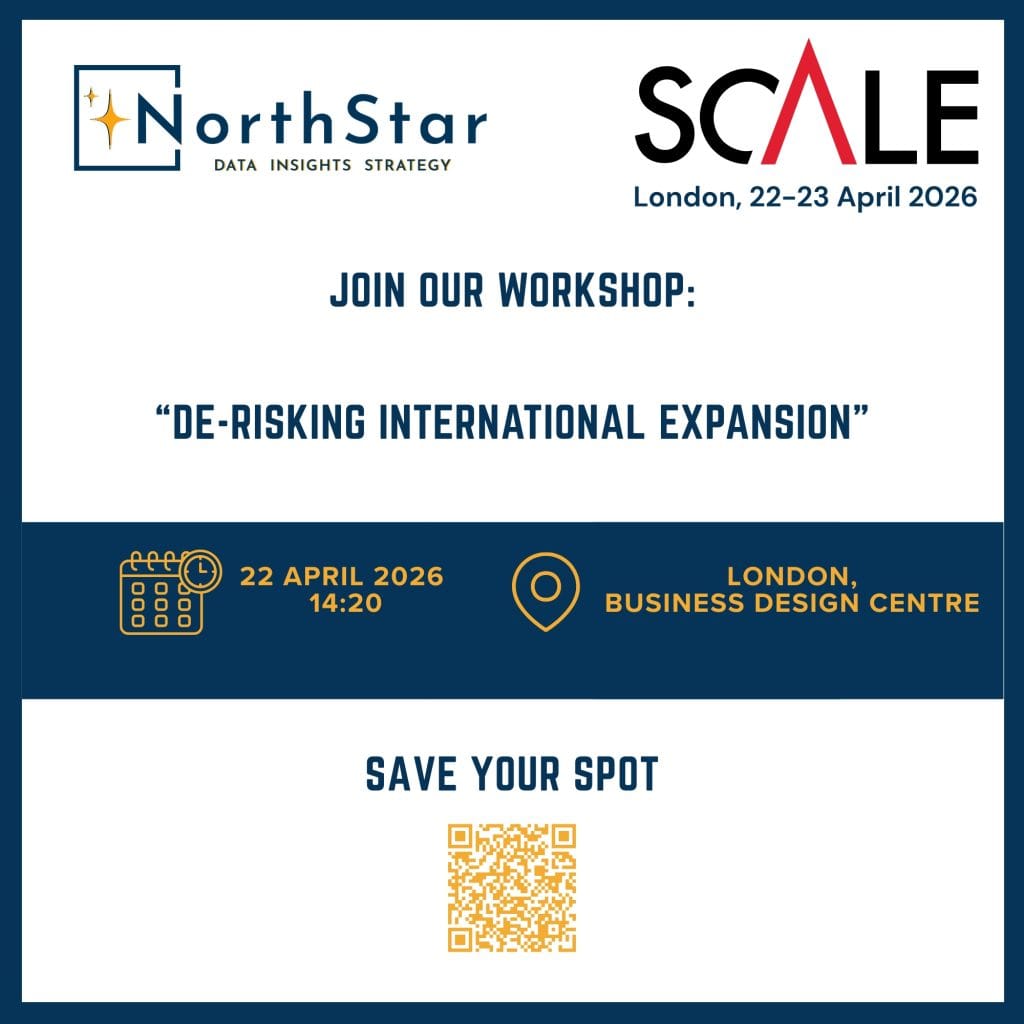
Come join us at the SCALE EXPO in London on April 22 and 23, Stand SC64 and register for our Internationalisation workshop: 30 minutes to talk about the common mistakes SMEs make and how to avoid them!